NemoClaw is NVIDIA’s OpenClaw plugin for OpenShell that focuses on making always-on assistants safer through sandboxing, policy enforcement, and controlled inference access. However, it remains alpha software with the official docs noting significant setup and maturity caveats.
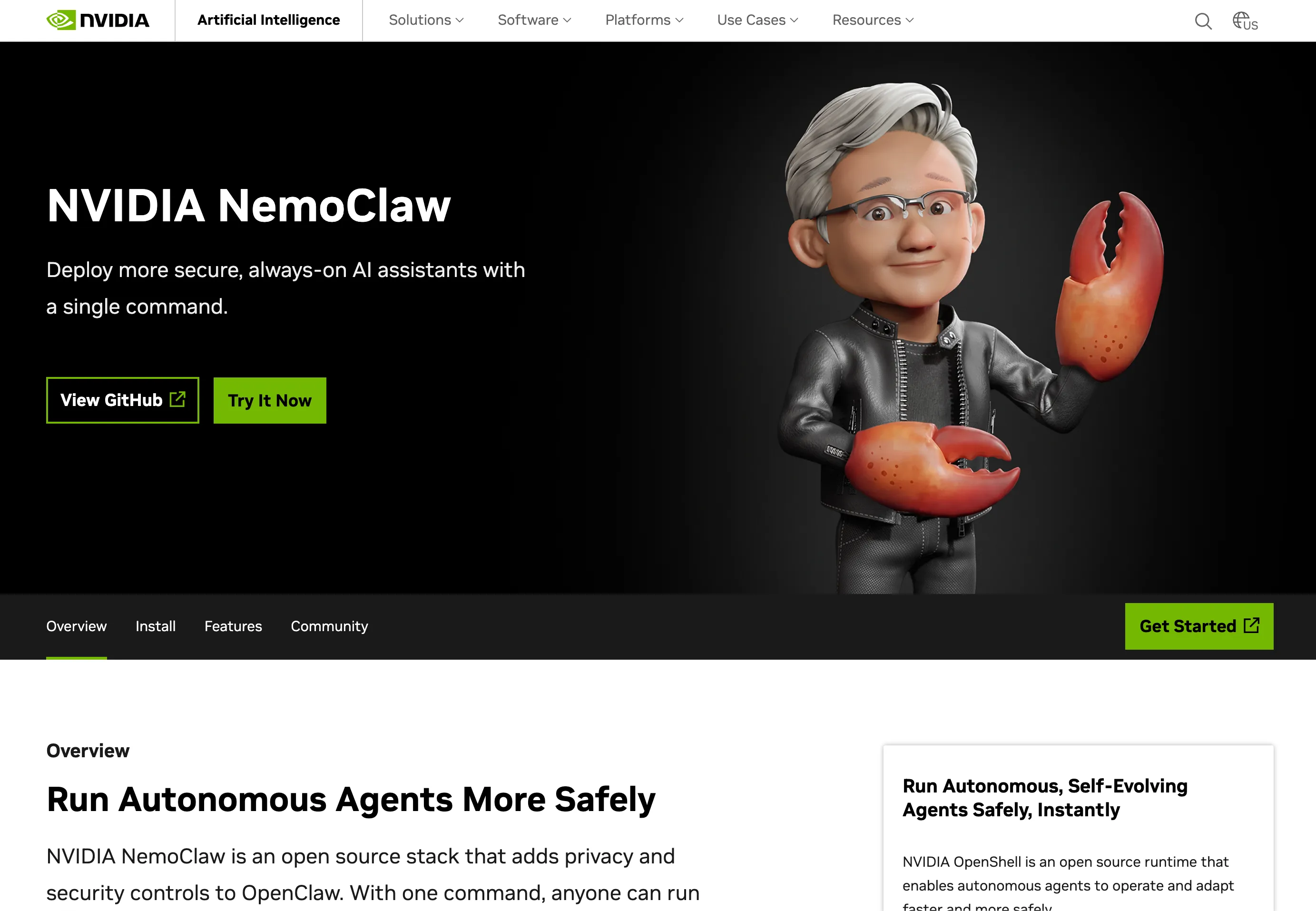
That means the original “NVIDIA is launching an enterprise alternative to OpenClaw” framing was too loose. The official docs show something more specific and more interesting: NemoClaw extends OpenClaw rather than replacing it.
If you want the simpler overview of OpenClaw itself, read What is OpenClaw and how can it help?. This post focuses on what NVIDIA actually shipped and how it relates to OpenClaw.
What NemoClaw actually is
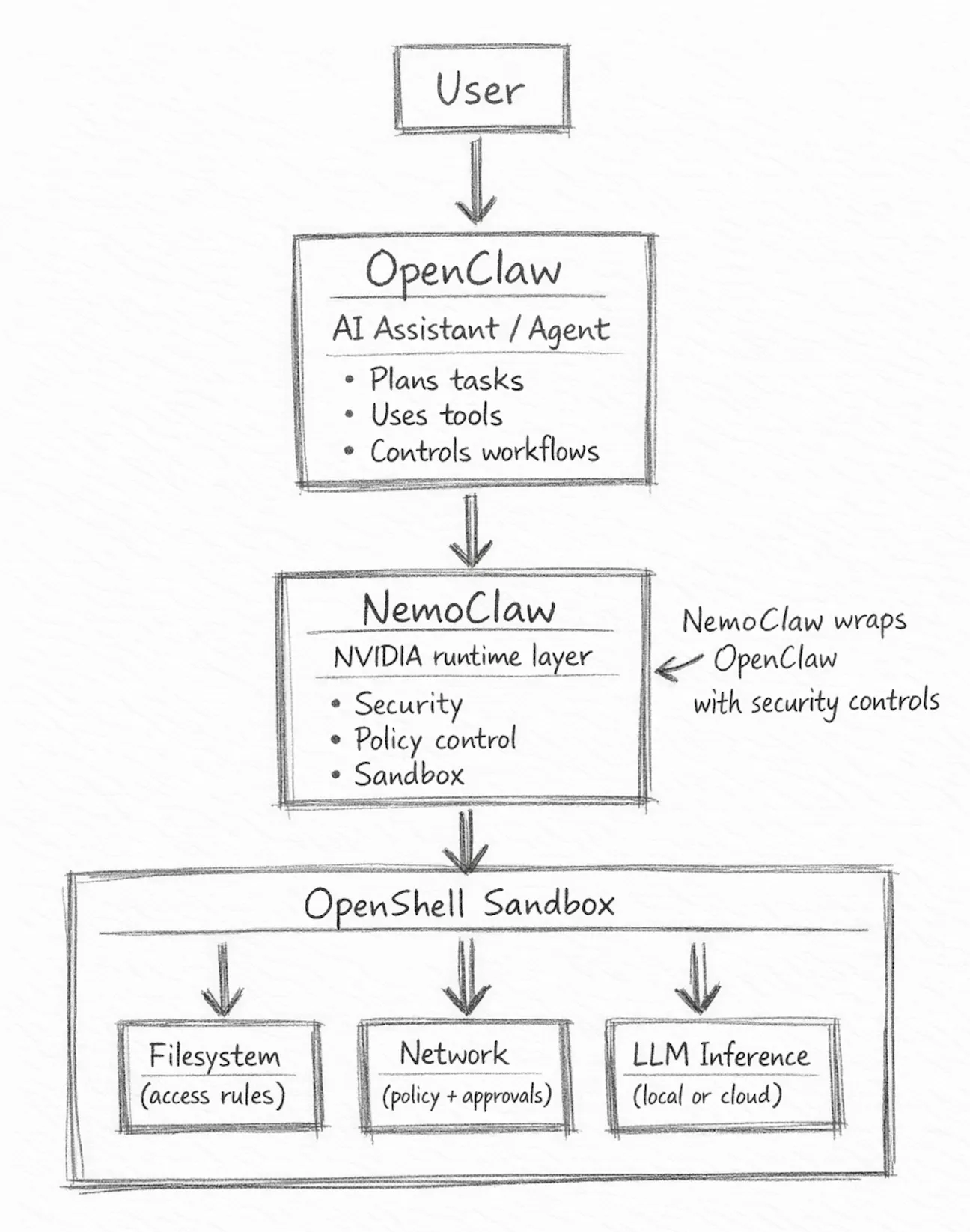
According to the official docs and GitHub repository, NemoClaw is an OpenClaw plugin for NVIDIA OpenShell:
- OpenClaw remains the assistant layer;
- OpenShell provides the sandboxed runtime;
- NemoClaw connects the two and adds policy-aware controls around how the assistant runs.
NVIDIA NemoClaw product page positions NemoClaw as a way to run always-on AI assistants more safely. The docs describe a setup where OpenClaw runs inside an OpenShell sandbox with controls for:
- outbound network access;
- filesystem access;
- inference provider routing;
- session monitoring;
- operator approval for new external connections.
So the most accurate one-line description is this:
OpenClaw is the assistant. NemoClaw is NVIDIA’s controlled runtime and security layer around it.
Why it is not really an OpenClaw alternative
The old announcement-style reading made NemoClaw sound like NVIDIA was shipping a separate assistant platform to compete with OpenClaw.
That is not what the current docs say.
The repo README explicitly calls NemoClaw an OpenClaw plugin, and the docs show commands under the openclaw nemoclaw namespace as well as a host-side nemoclaw CLI. That is a complement pattern, not a replacement pattern.
This distinction matters because it changes how you should evaluate the project:
- if you want the assistant experience itself, you are still evaluating OpenClaw;
- if you want stricter runtime controls around that assistant, you are evaluating NemoClaw plus OpenShell.
In other words, NemoClaw is closer to a security, policy, and deployment layer than to a separate messaging-first AI assistant product.
What NVIDIA added on top
The official materials make a few capabilities very clear.
1. Sandboxed execution
NemoClaw runs OpenClaw in an OpenShell sandbox rather than as a loosely managed local process.
The docs describe several protection layers, including:
- network namespaces;
- seccomp filtering;
- Landlock-based filesystem restrictions;
- process isolation;
- sandbox-specific policy enforcement.
This is a much more opinionated operating model than “install an assistant and let it reach the internet.”
2. File and network policy control
The network policy docs are one of the most important nuances.
NemoClaw is not simply “internet on” or “internet off.” It uses declarative policy plus interactive approval. The baseline policy allows a defined set of destinations, and new outbound requests can be surfaced in a text UI for operator approval.
That is a meaningful detail, because it means “secure by default” does not mean “air-gapped by default.” It means predefined access plus explicit review for anything new.
The filesystem model is similarly constrained. The docs describe /sandbox and /tmp as writable inside the sandbox, while other paths are more tightly controlled.
3. Routed inference, not just one model backend
The inference docs show that NemoClaw is not tied to a single hosted model endpoint.
NVIDIA documents multiple inference profiles, including:
- NVIDIA-hosted inference;
- local NIM setups;
- local vLLM setups.
That gives operators a real choice between cloud-backed and local inference paths, which is a bigger architectural nuance than the original post captured.
4. Operational tooling, not just a plugin wrapper
The docs and repo also show an operational story around the sandbox:
- onboarding and connect flows;
- commands to inspect or manage the environment;
- sandbox activity monitoring;
- deployment guidance for remote GPU instances;
- a Telegram bridge workflow.
That makes NemoClaw feel less like a naming exercise and more like a practical runtime package for running OpenClaw-based assistants with tighter controls.
Important caveats from the docs
The official sources also make it clear that NemoClaw is not a finished, friction-free product yet.
It is alpha
NVIDIA’s product page and docs describe NemoClaw as alpha.
That should shape expectations immediately. Alpha software can be useful, but it is not the same as mature, boring infrastructure.
The setup is opinionated
The docs and repo show real prerequisites, including:
- Linux support centered on Ubuntu 22.04 or newer;
- Docker;
- NVIDIA OpenShell;
- OpenClaw in a fresh-install flow.
NVIDIA’s marketing page presents a very simple install story, but the developer docs are more nuanced and more constrained. That difference is worth noting.
The tooling is still evolving
The docs distinguish between plugin-side commands and host-side commands, and they note that some command surfaces are under active development.
That is another sign you should read NemoClaw as early but real, not as a finished general-availability platform.
NemoClaw vs OpenClaw, in practical terms
If you step back, the picture is much clearer now than it was during the announcement phase.
OpenClaw
OpenClaw is the assistant product:
- messaging-first;
- self-hosted;
- user-facing;
- centered on the actual assistant experience.
NemoClaw
NemoClaw is the runtime and controls layer around that assistant:
- sandboxing;
- policy enforcement;
- inference routing;
- approvals for new outbound access;
- operational deployment and monitoring.
So yes, they overlap in the sense that both are part of the same assistant stack.
But no, NemoClaw is not best described as NVIDIA’s separate alternative to OpenClaw. The official docs now make that framing too inaccurate.
Summary
NemoClaw is a more controlled way to run OpenClaw, but it is not a standalone product. It is an OpenClaw plugin for NVIDIA OpenShell that adds sandboxing, policy enforcement, and controlled inference access. If you want the assistant itself, evaluate OpenClaw.
Frequently Asked Questions
If you read the article, but still have questions. Please, check the most frequently asked. And if you still have questions, feel free reach out at support@screenshotone.com.
Is NemoClaw available today?
Yes. As of March 16, 2026, NVIDIA has a public GitHub repository, public documentation, and a product page for NemoClaw. It is still an alpha software.
Is NemoClaw an alternative to OpenClaw?
Not really. NVIDIA describes NemoClaw as an OpenClaw plugin for OpenShell that runs OpenClaw inside a more controlled sandboxed environment.
What does NemoClaw add on top of OpenClaw?
NemoClaw adds sandboxing, file and network policy controls, inference routing, approval flows for new outbound requests, and operational tooling such as monitoring and remote deployment guides.